50 Years of Port Lympne Reserve:
A Journey Through History, Conservation and the Wild
For half a century, Port Lympne Reserve has stood as one of the UK’s most remarkable destinations for wildlife conservation, immersive experiences and historic grandeur. As we celebrate 50 years of Port Lympne being open to the public, we look back on a story that stretches far deeper than 1976 - from Roman ports and wartime intrigue to pioneering conservation successes and ambitious plans for the future.
Roman Roots:
Portus Lemanis and the Birth of Lympne

Long before lions, giraffes and rhinos roamed the Kent countryside, the land around Port Lympne played a vital role in Roman Britain. The area was once home to Portus Lemanis, also known as Lemanae - an important Roman fort, settlement and harbour guarding the southern coastline of Kent.
Situated near what was then a navigable channel to the sea, Portus Lemanis formed part of the Roman Saxon Shore defences, protecting Britain from seaborne threats. Over centuries, the coastline shifted and the harbour silted up, but its legacy lives on in the modern village of Lympne, whose name derives directly from the ancient Roman port.
Today, visitors standing on the hills of Port Lympne can still appreciate the strategic importance of this elevated landscape - commanding sweeping views across Romney Marsh and towards the English Channel, just as Roman sentries once did. In fact, a Roman Centurion is rumoured to walk the grounds at night...
The Birth of Port Lympne Mansion
Edwardian Grandeur and Architectural Vision
Port Lympne Mansion was constructed in 1911, designed by renowned British architect Sir Herbert Baker. Built in the distinctive Cape Dutch architectural style, the mansion is one of the finest examples of this design in the UK, characterised by elegant white façades, decorative gables, sweeping terraces and strong horizontal lines.
The mansion occupies a commanding position atop the hill, overlooking Romney Marsh and the Kentish countryside, with materials such as local stone and flint grounding the building firmly in its landscape.


The Sassoon Era: High Society and Glamour
In 1914, the estate was acquired by Sir Philip Sassoon, MP for Hythe and one of the most influential social figures of early 20th-century Britain. Known as the greatest entertainer (and most eligible bachelor) of his generation, Sassoon transformed Port Lympne into a glittering hub of politics, culture and society.
Guests included an extraordinary roll call of history’s most recognisable names: Winston Churchill, David Lloyd George, Charlie Chaplin, T.E. Lawrence (Lawrence of Arabia), Noel Coward, Lord Louis Mountbatten, Edward VII, George V, and later Edward, Prince of Wales (Edward VIII) and Wallis Simpson.
Despite its splendour, the mansion was used for only around six weeks each year, primarily during the summer when Sassoon could showcase the gardens at their finest.


Architectural Enhancements and the Trojan Staircase
During the 1920s, Sassoon commissioned architect Philip Tilden to expand and elevate the estate. One of the most dramatic additions was the Trojan Staircase; 125 imposing stone steps descending from the mansion to the gardens below, complete with ram’s head motifs and classical detailing that echo ancient Roman grandeur.
The gardens themselves were carefully curated, blending formal Italianate design with wide terraces that framed uninterrupted views across the marsh and coastline.


Murals, Art and Restoration
Many of the mansion’s original features remain strikingly visible today, including the marble columns and grand stone staircase. Sassoon also commissioned two mural rooms - one by Rex Whistler and another by José María Sert. During World War II, the Sert Room was boarded up while troops were housed at the mansion, inadvertently saving it from destruction.
Although the murals later suffered damp damage, extensive restoration was carried out with the involvement of the Tate Gallery, preserving these artistic treasures for future generations.
When John Aspinall purchased Port Lympne in 1973, he envisioned the mansion as a true “Mansion of Murals.” In 1985, he commissioned Spencer Roberts to repaint the Sert Room, now featuring 220 species of animals - many drawn from observation at Port Lympne and Howletts. Later, explorer and self-taught artist Martin Jordan was commissioned to create a millennium mural depicting Indian tigers, John Aspinall’s favourite animal, complete with a hidden portrait of Aspinall himself overlooking the scene.
 ;
;
 ;
;
 ;
;
 ;
;
 ;
;
 ;
;
Wartime History and a Changing Role
Sir Philip Sassoon played a pivotal role during the First World War, serving as private secretary to Field Marshal Sir Douglas Haig and later as Parliamentary Private Secretary to David Lloyd George. After Sassoon’s death in 1939, the mansion fell largely silent.
During World War II, Port Lympne briefly housed RAF Free Czech troops in 1942. While the estate survived the war, decorative elements suffered, and by the time John Aspinall acquired the property in 1973, major restoration was required.
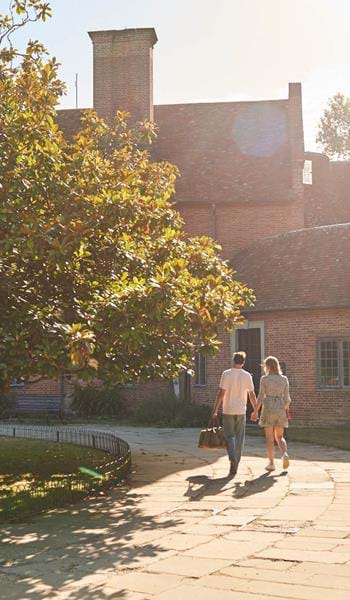
With support from English Heritage, the Grade II*-listed mansion was eventually transformed into a boutique hotel, reopening in 2014 and allowing guests to once again experience its historic splendour.


Royal Connections Through the Years
Port Lympne has welcomed royalty for over a century. During the Sassoon era, royal guests included Edward, Prince of Wales, and the Duke of York (later King George VI).
In modern times, the reserve’s conservation mission has drawn a new generation of royal visitors. In 2012, Prince William visited Port Lympne as patron of the Tusk Trust, meeting keepers and feeding black rhino Zawadi ahead of the species’ return to Africa.

The Modern Era:
Conservation at the Core
John Aspinall purchased Port Lympne in 1973 as an expansion of Howletts Wild Animal Park, laying the foundations for what would become Port Lympne Hotel & Reserve. When the reserve opened to the public in 1976, a new chapter began - one focused on conservation, breeding and rewilding.
Today, Port Lympne is home to over 900 animals from more than 90 species, many of them among the world’s rarest and most endangered.
Together with sister park Howletts, Port Lympne is the world’s most successful breeder of western lowland gorillas, with 155 viable births to date. Other landmark births include:

These achievements stand as a testament to the dedication, expertise and compassion of the animal care teams and their pioneering approach to animal husbandry, breeding and conservation.
Landmark Animals and Conservation Milestones
Over the decades, Port Lympne has been home to animals whose stories have shaped conservation history:

Bwana Kidogo
Bwana Kidogo, born at Port Lympne, became the first captive-born black rhino to be returned to Africa in 1995.

Torgamba
Torgamba, the Sumatran rhino, lived at Port Lympne for 11 years before returning to Indonesia in 1998.

Samira
Samira, the Barbary lion cub born in 2003, captured hearts worldwide through her remarkable hydrotherapy journey, learning to walk again after injury.

Scar
Scar, the first brown hyena born in captivity in the UK, travelled to South Africa in 2003.

May Tagu
May Tagu, the last Asian elephant born at Port Lympne, was born in 2005 before relocating with the herd in 2006.

First Baby Giraffe
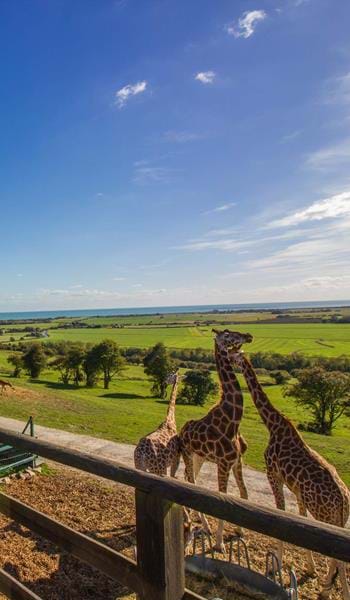
Our first baby giraffe, Karamoja was born in July 2006. With the introduction of our new breeding male Zabuni in July 2023 we hope to welcome even more offspring soon…

Kingut
Kingut, the world’s oldest tapir in captivity, lived to the age of 42, charming keepers and visitors alike.

The Painted Dog Pack
In 2019, a pack of endangered African painted dogs born at Port Lympne became the first to return to Gabon in over 25 years.

Brown Bears
In 2021 our generous supporters raised the funds to rescue a family of brown bears from a zoo in Andorra which was closing down. Julio, Enciam, Neu and the cubs, Rojo and Tornillo are now part of the Port Lympne family and a firm favourite with our visitors.

The Rhino Collection
With the arrival of Orys in 2022, Port Lympne became the only collection in Europe to house three different species of rhino, black rhino, white rhino and greater one-horned rhino.

Orangutans
A brand new species joined us in 2023 – Hadjah and Malou the Sumatran orangutan brothers. We are one of only 4 UK parks to house this critically endangered species.
From Day Visits to Iconic Safari Stays
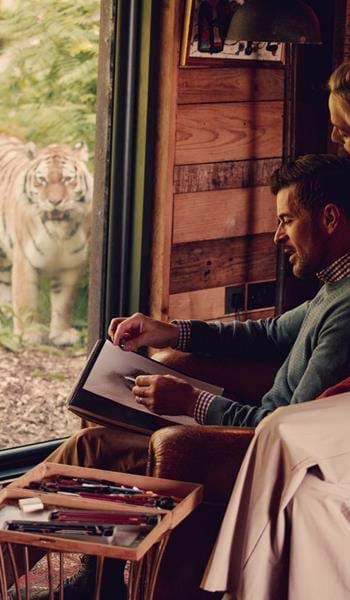
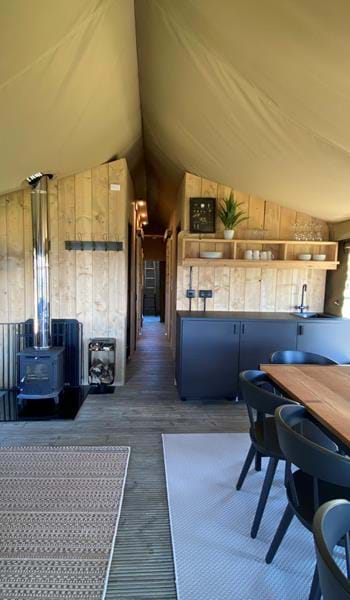
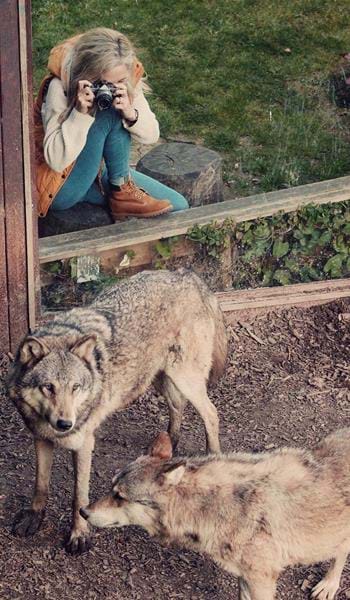
In 2007, Port Lympne revolutionised wildlife tourism in the UK by introducing overnight stays. The first guests stayed at Livingstone Lodge (now Giraffe Lodge), enjoying private safaris, African-inspired dining and unparalleled views across the reserve.
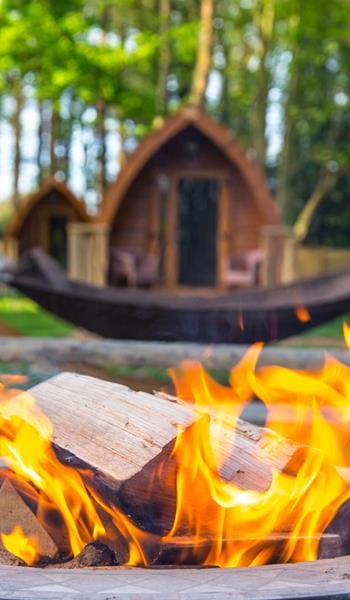
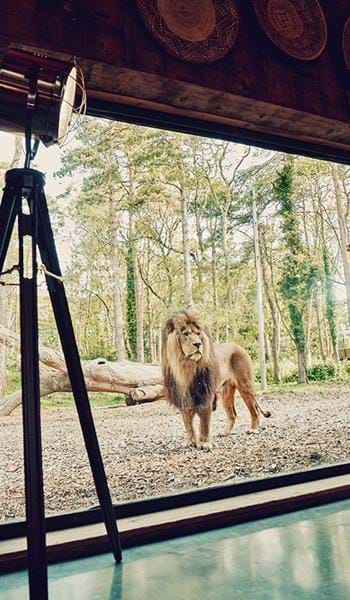
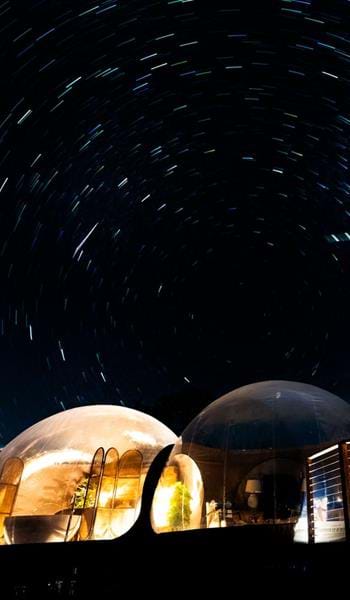
This innovation paved the way for today’s portfolio of 14 unique accommodation experiences, including the opening of the Mansion hotel in 2014, Pinewood Pods, glamping retreats and the UK’s original Lion Lodges.
Port Lympne Illuminated
Innovation never stops at Port Lympne Reserve - in 2025, we launched our first-ever light trail, Port Lympne Illuminated. Featuring spectacular light sculptures, holograms and a mesmerising fountain display, the event proved an instant success and will return in 2026 with even more surprises to delight our guests.
Looking to the Future:
The Next 50 Years
As Port Lympne celebrates 50 years open to the public, the future is brighter than ever. Ambitious new developments will bring guests even closer to wildlife, including Giraffe Hall, offering intimate encounters with giraffes from a restored historic hall, and Lion Lookout, an immersive glamping experience overlooking Europe’s largest lion enclosure.
These projects reflect Port Lympne’s enduring mission: to inspire deeper connections between people and wildlife, support global conservation efforts, and protect endangered species for generations to come.
After 50 extraordinary years, Port Lympne’s story is far from finished - and the wild adventure continues.
Giraffe Hall
COMING SOON
Lion Lookout
COMING SOON