The Gardens of Port Lympne Reserve:
Historic Terraces, Seasonal Colour and Sweeping Kent Views
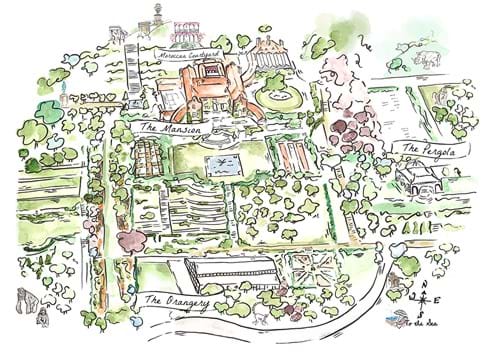
Surrounding the historic mansion at Port Lympne Reserve is an extraordinary collection of formal gardens, tree-lined walks, sun-soaked terraces and productive planting spaces. Overlooking the Kent countryside towards Romney Marsh, the gardens combine early 20th-century grandeur with decades of thoughtful evolution, creating a landscape filled with colour, character and remarkable stories.
From hydrangeas, magnolias and spring bulbs to grape vines, fig trees and herbaceous borders, each part of the Port Lympne gardens has its own atmosphere. Classical statues, historic staircases, elegant paving and architectural viewpoints connect the different spaces, while the changing planting ensures there is something new to discover throughout the seasons.
For guests searching for beautiful gardens in Kent, historic places to visit or a day out that combines wildlife, architecture and nature, the gardens at Port Lympne Reserve offer a distinctive experience unlike anywhere else.
A Historic Garden Shaped by Remarkable Owners
The gardens surrounding Port Lympne Mansion have developed through several important periods in the estate’s history. Original architectural features were created alongside the mansion, before later owners adapted the landscape to reflect changing tastes and the way the estate was used.
Sir Herbert Baker’s original garden design included the immense Trojan Staircase, a flight of 125 steps once flanked by Grecian temples on the upper terraces. Following the First World War, Philip Tilden altered elements of the gardens as the estate developed from a weekend retreat into a more luxurious place for entertaining and relaxation. The middle and lower terraces have since evolved again, with roses and mophead hydrangeas bringing colour and softness to the monumental stonework.
The gardens continued to change during John Aspinall’s ownership. New access routes were created, existing areas were repurposed and several distinctive details were introduced, including the hippo sculptures found in the lily pond near the mansion.
This combination of historic design and later reinvention gives the Port Lympne gardens their distinctive personality. They are formal without feeling static, grand without losing their sense of warmth and discovery.
Hydrangea Walk and Views Across Romney Marsh


Hydrangea Walk is one of the most memorable areas of the mansion gardens. Beds of mophead hydrangeas line both sides of the pathway, producing abundant pink blooms from late May before gradually changing to softer, more rustic shades as autumn approaches.
Beginning near an impressive 17th-century urn, the walk draws the eye south towards far-reaching views across Romney Marsh. The combination of flowers, historic stonework and open countryside creates a particularly photogenic setting and captures the balance between formal gardening and the wider Kent landscape.
Hydrangeas also feature on the terraces around the Trojan Staircase, where their rounded flowerheads soften the strong architectural lines of the steps.
Lime Tree Walk and the Statue of King George II


Beyond the terraces, Lime Tree Walk forms an elegant avenue leading away from the mansion. European lime trees line the route, creating a strong sense of perspective and framing the statue of King George II at its far end.
During spring, bulbs planted beneath the trees bring fresh seasonal colour to the avenue. As the leaves develop, the walk becomes increasingly green and shaded, offering a different experience from the sunny, open terraces nearby.
The statue stands facing back towards the mansion, adding a theatrical focal point to the long, tree-lined approach.
Magnolia Walk

Magnolia Walk is home to evergreen southern magnolias, whose glossy foliage provides year-round structure. Their large white flowers begin as upright, candle-like buds before opening to approximately the size of a dinner plate.
The flowers also carry a delicate fragrance with notes reminiscent of lemon, making this short walk especially appealing when the magnolias are in bloom.
The magnolias demonstrate how scent, scale and texture are used throughout the Port Lympne gardens. Some spaces are designed around sweeping views, while others reward guests who pause to look more closely.
The Long Borders


Long mixed borders were a defining feature of large Arts and Crafts country gardens, and Port Lympne’s Long Borders continue that tradition.
The original planting design was created by celebrated garden designer Norah Lindsay, a friend of Sir Philip Sassoon. Following the Second World War, the overgrown borders were replanted to a design by influential landscape designer Russell Page.
The present planting scheme was created by Port Lympne gardener Misako Rigden, drawing inspiration from both historic designs while developing a border suited to the gardens today.
This layered history makes the Long Borders particularly significant. They are not simply decorative beds, but a living interpretation of different periods in British garden design.
The Western Terraces


The south-facing Western Terraces are among the sunniest parts of the garden. Their colourful borders, lawns and warm stonework make them especially inviting during the summer months.
The upper terrace was originally used as a games lawn, where Sir Philip Sassoon and his guests would have played croquet and lawn bowls. Today, the terraces remain a beautiful place to pause and take in the atmosphere of the mansion gardens.
Their elevated position also helps connect the formal spaces around the house with the wider reserve and the landscape beyond.
The Vineyard

Port Lympne’s vineyard occupies a south-facing terrace that has been used for growing grapes since the time of Sir Philip Sassoon.
Its position provides generous sunlight throughout much of the day, while the stone terrace walls absorb and retain heat into the evening. These warm conditions help support the growth and ripening of the grapes.
The vineyard is an excellent example of how the garden’s architecture and planting work together. The terraces do more than create dramatic views: they also form sheltered microclimates suitable for plants and fruit that benefit from additional warmth.
The Figyard and Rose Garden

The Figyard occupies another warm, south-facing slope. Brown and white fig trees benefit from the sunshine and retained heat, helping their fruit to ripen.
Historically, the area may also have supported stone fruits including plums, greengages and apricots. A small number of plum trees remain, providing a connection to the productive garden that once occupied the terrace.
Alongside the vineyard, the figyard helps reveal a practical side to the Port Lympne gardens. These spaces were not created solely for ornament; they were also used for cultivating fruit in carefully selected conditions.
The Iceberg Garden


The Iceberg Garden was originally a lawn during Sir Philip Sassoon’s ownership. John Aspinall later paved the area and named it after the white rose cultivar that once formed the main planting scheme.
The resulting space has a calm, restrained character. Its pale planting, structured surfaces and sheltered position offer a quieter contrast to the vibrant hydrangeas and expansive mixed borders found elsewhere in the gardens.
Azalea Walk


Azalea Walk is shaded by a purple beech hedge, creating conditions particularly well suited to azaleas and woodland-style planting.
In spring, the borders are filled with flowering bulbs and fresh seasonal growth. Later in the year, autumn-flowering plants bring interest at a time when much of the garden is beginning to settle for winter.
The walk illustrates the importance of seasonal succession within the gardens. Different spaces reach their peak at different times, encouraging repeat visits throughout the year.
The Stripe Garden


The Stripe Garden was traditionally used for seasonal bedding. Its original three-bed layout was later changed to two long beds, with herbaceous plants and shrubs replacing the former seasonal displays.
The current design, created by Misako Rigden, retains the visual idea of stripes while interpreting the theme through a more permanent planting scheme.
This approach allows the garden to acknowledge its historic layout while developing a richer mixture of plants, forms and textures.
The Checkerboard Garden


The Checkerboard Garden formed part of the estate’s original formal garden design. Its grid of square beds was created for mass seasonal planting, a style that was highly fashionable during the early 20th century.
Filling the garden completely would require an extraordinary 7,200 plants, with approximately 400 plants needed for each of its 18 squares. The displays would traditionally have been planted and removed twice a year, demanding a substantial amount of horticultural work.
Even when not presented with its full historic bedding scheme, the garden offers a fascinating insight into the scale, ambition and labour behind formal Edwardian planting displays.
The South Terrace


The southern façade of Port Lympne Mansion takes on an almost Mediterranean character during summer, when wall shrubs and climbing plants cover parts of the building.
Planting on the lower terrace features cool shades of pink, blue and lilac. These gentle colours complement the warm tones of the architecture and create an elegant transition between the mansion and the garden.
The upper level also contains paving details that echo those found on the Western Terraces, helping to create continuity across the formal spaces surrounding the house.
The Orangery and Clair-Voyée


The area now occupied by the Orangery has experienced several transformations. It was originally used as tennis courts and later became a hedge maze before the construction of the present Orangery.
Above it stands the vaulted clair-voyée, a term meaning “clear view”. The structure was once known as the Tennis Club and later became a viewing point from which visitors could look across the yew maze.
Today, the Orangery and its surroundings remain among the most striking architectural features of the gardens, providing a dramatic focal point within the wider landscape.
The Main Lawn, Fish Pond and East Forecourt


The garden immediately south of the mansion has changed considerably over time. The present fish pond was once a swimming pool, while two large stone terraces formerly stood nearby. These were removed following subsidence, leaving two carved stone scrolls as reminders of the earlier layout.
At the East Forecourt, the original circular turning area retains its skilfully laid Yorkstone paving. It would once have welcomed Sir Philip Sassoon’s guests as they arrived at the mansion for lavish gatherings.
The lily pond’s hippo sculptures were added during John Aspinall’s ownership, introducing a playful wildlife connection to the formal garden setting. Repeated circular paving outside the Garden Room Restaurant helps visually link the historic forecourt with the surrounding hospitality spaces.
The Chimp Steps


One of the gardens’ most distinctive names belongs to the Chimp Steps. Although designed to complement the wider historic landscape, the steps were added during the 1980s to improve access between the Eastern Terraces and the lower parkland.
John and Lady Sarah Aspinall would walk chimpanzees along this route from a nearby house, giving the steps their unusual name. The building associated with this story later became home to bachelor gorillas.
The Chimp Steps are a reminder that the story of Port Lympne’s gardens is inseparable from the wider history of the wildlife reserve.
Gardens to Experience Throughout the Seasons
The gardens at Port Lympne change continuously through the year.
Spring brings bulbs beneath the lime trees, colour to Azalea Walk and fresh growth across the herbaceous borders. From late May, Hydrangea Walk begins its display, while magnolias produce their enormous scented flowers.
Summer fills the south-facing terraces with warmth and colour. Climbers soften the mansion walls, borders become increasingly abundant and the vineyard and fig trees benefit from long hours of sunshine.
As autumn arrives, the hydrangeas take on muted, rustic tones and later-flowering plants provide final moments of colour. Winter reveals the underlying design of the landscape, from its terraces and staircases to its avenues, statues, clipped hedges and architectural viewpoints.
More Than a Wildlife Day Out in Kent
Port Lympne Reserve is widely known for its wildlife and conservation work, but its gardens add another dimension to a visit.
They provide space to slow down between wildlife experiences, explore the history of the mansion and enjoy one of Kent’s most distinctive designed landscapes. The contrast between formal terraces, Mediterranean-style planting, productive fruit-growing areas and expansive countryside views means every section feels different.
For garden lovers, history enthusiasts, photographers and families looking for an unusual day out in Kent, the gardens make Port Lympne much more than a traditional wildlife attraction.
Frequently Asked Questions About the Port Lympne Gardens
Where are the gardens at Port Lympne Reserve?
The formal gardens surround Port Lympne Mansion within Port Lympne Reserve in Kent. They include terraces, avenues, planted walks, productive gardens and architectural features positioned around the historic house.
What can you see in the Port Lympne gardens?
Highlights include Hydrangea Walk, the Trojan Staircase, Lime Tree Walk, Magnolia Walk, the Long Borders, Western and Eastern Terraces, the vineyard, figyard, Azalea Walk, the Stripe Garden, the Checkerboard Garden, the South Terrace and the Orangery.
What flowers grow in the gardens at Port Lympne?
Planting includes mophead hydrangeas, roses, southern magnolias, azaleas, herbaceous perennials, spring bulbs, wall shrubs and climbing plants. The exact displays vary according to the season.
Are there fruit trees and vines at Port Lympne?
Yes. The gardens include a historic vineyard as well as fig trees and a small number of remaining plum trees. The south-facing terraces and heat-retaining stone walls create favourable growing conditions.
When is the best time to see the Port Lympne gardens?
The gardens offer interest throughout the year. Spring is ideal for bulbs and azaleas, while hydrangeas begin flowering from late May. Summer brings full borders, scented magnolias and colourful terraces, while autumn introduces softer foliage and flower colours.
Are the gardens at Port Lympne historic?
Yes. The gardens contain features and planting areas developed during several periods of Port Lympne’s history. Their design has been influenced by architects, estate owners and notable garden designers including Norah Lindsay and Russell Page.
Is Port Lympne suitable for people interested in garden design?
The gardens are particularly rewarding for those interested in formal garden design, Arts and Crafts borders, terraced landscapes, historic planting schemes, productive gardens and the relationship between architecture and horticulture.
Can you visit the gardens as part of a day out at Port Lympne Reserve?
The gardens form part of the wider Port Lympne experience. Access arrangements, opening times and any restrictions should be checked before travelling.
Why are they called the Chimp Steps?
The steps were added in the 1980s to provide easier access between the terraces and lower parkland. John and Lady Sarah Aspinall once used the route while walking chimpanzees, which led to the name.
What makes the gardens at Port Lympne unique?
Their combination of historic architecture, sweeping Kent views, formal terraces, seasonal planting and connections to the reserve’s wildlife heritage makes them unlike a conventional country-house garden.